
Designing spaces for families is never just about the parents. If it were, every room would look like a magazine cover and every child would look like a polite museum visitor. Instead, kids climb, sprawl, stash treasures in mysterious places, and create entire universes out of Legos. Parents may crave order, but kids remind us that order without imagination is basically a storage unit.
When we design spaces for families, we do not just organize for the parents and hope the kids adapt. We invite the kids into the process. The goal is to build systems that actually work for every human who lives there. And if you want the truth about whether something works (or how old you really look), trust the kid who will absolutely tell you.
Let’s dive into a few classic family battlegrounds we've come across in our clients' homes and explore how everyday chaos can be transformed into systems that truly work for everyone.
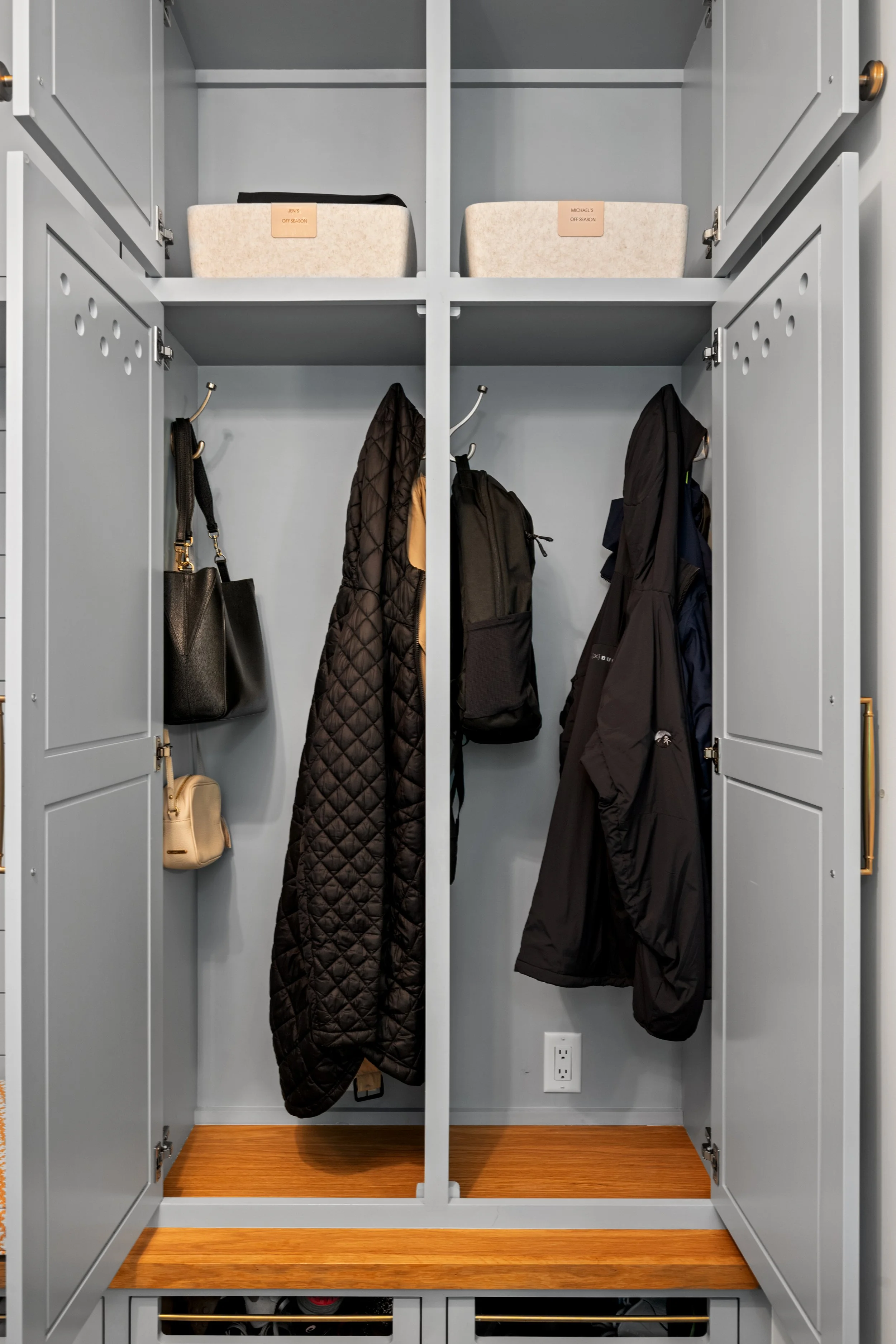
Entryway Overload
Kids have one universal instinct. Drop everything the moment they cross the threshold. Backpacks, shoes, jackets, snacks, emotional baggage, all of it, right there on the welcome mat. You can fight this instinct, or you can accept reality and plan for it.
The winning strategy is simple. Give every family member a bin, basket, or cubby. This creates a target zone. Will they always hit the target? No. Will they get close enough that you can pretend they did? Yes. And when the bins start overflowing, that is your cue that it is time for a cleanup mission. And this mission does not have to be yours alone. Make sure to involve the owner of those bins and belongings. Playing the "Mission Impossible" theme song in the background while they do it is totally optional.
As for shoes, almost no family wins this battle. Even with beautiful shelves, drawers, or fancy shoe organizers, I still find shoes haphazardly strewn across homes like they own the place. Aim to keep the favorite and most seasonally relevant pairs by the door and send the rest back to their natural habitat, also known as the bedroom.
Bedrooms Beware
Kids are collectors of everything. Rocks. Stickers. Half eaten lollipops. Crumpled papers that might be secret maps or might be nothing at all. And yes, even dried slime creatures that look like they crawled out of a swamp.
When we organize a kid’s room, we treat every item with respect. We sort, categorize, and then review everything with them because you never know what is priceless and what is just sticky. Those tiny paper scraps might be early art masterpieces, secret notes to imaginary friends, or backup ammo for a sibling spitball showdown. We never assume. We always check.
And the best part is that many kids actually enjoy being part of the process. They like picking out organizing products to contain or help display their treasures. And folding clothes can be a kind of real life origami for grown ups and kids alike. If you make it fun, they will jump right in. So challenge your kids to a clothes folding contest. Everyone is a winner in that game!
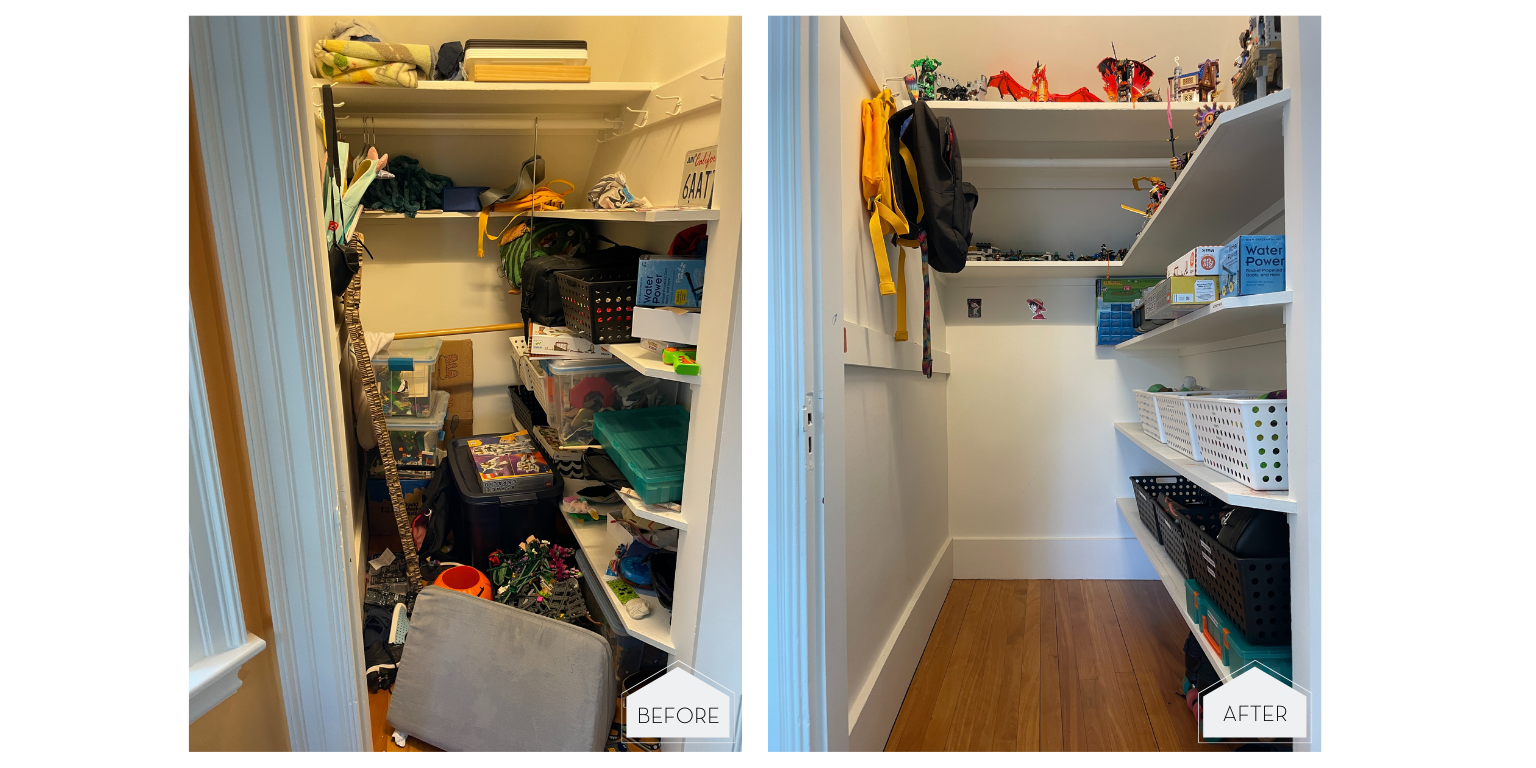
The bedroom closet of a young collector who was graciously willing to re-home some of his precious items!
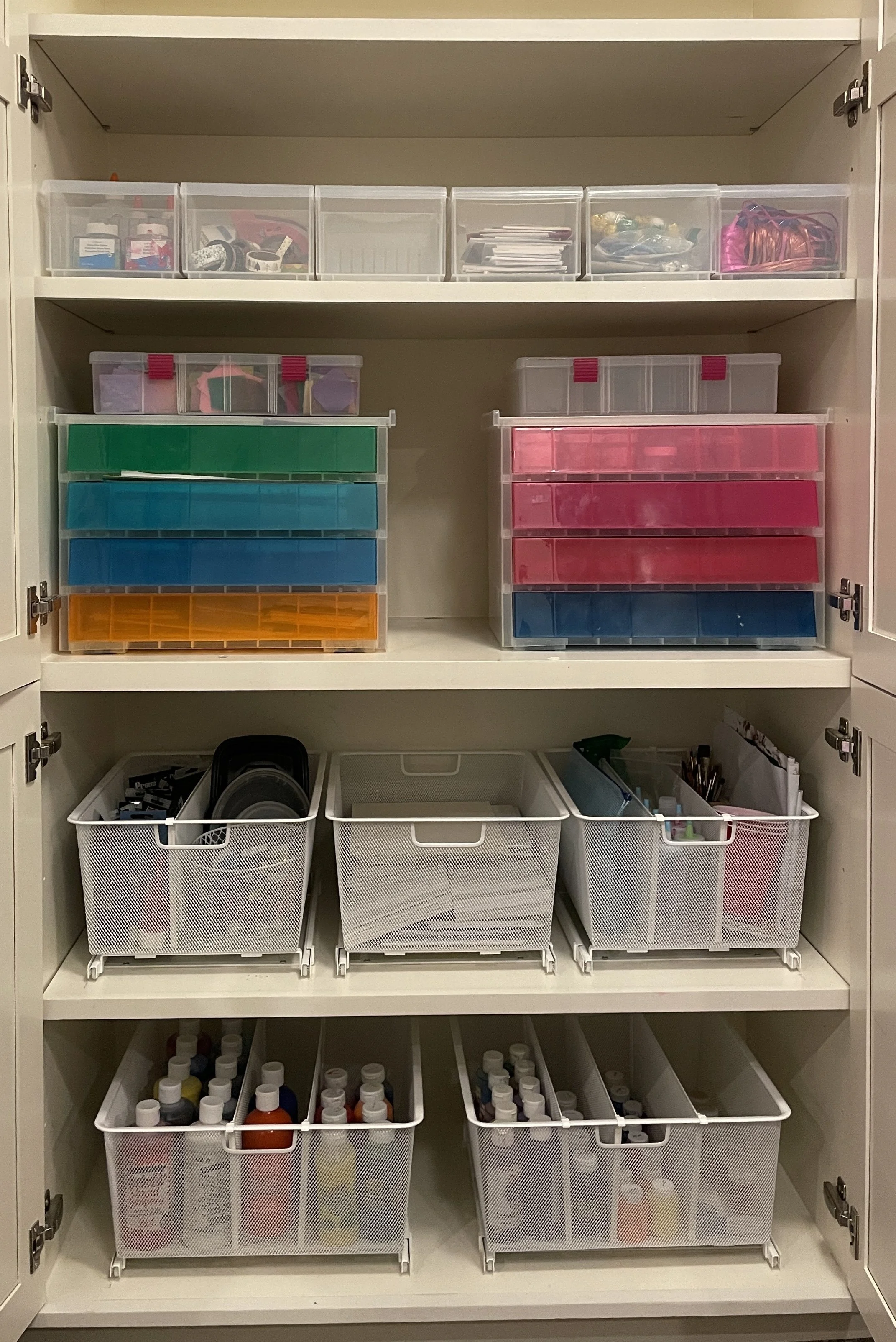
Arts & Crafts & Unsorted Supplies, Oh My
Repeat after me. It is perfectly acceptable to throw away dried markers. It is perfectly acceptable to weed out broken crayons. It is perfectly acceptable to ban glitter from your home forever.
A designated art supply zone or rolling craft cart is wonderful, but you do not need enough supplies to open your own Michaels. What you do need is a system that keeps everything findable. Otherwise you will keep buying glue sticks even though you already own seventeen.
We often donate extras to Make and Mend, a fantastic secondhand arts and crafts supply shop at 21 Hawkins St in Somerville, MA 02143. They accept small donations of supplies, fibers, stationery, patches, art books, maps, and more. Their website has all the details!
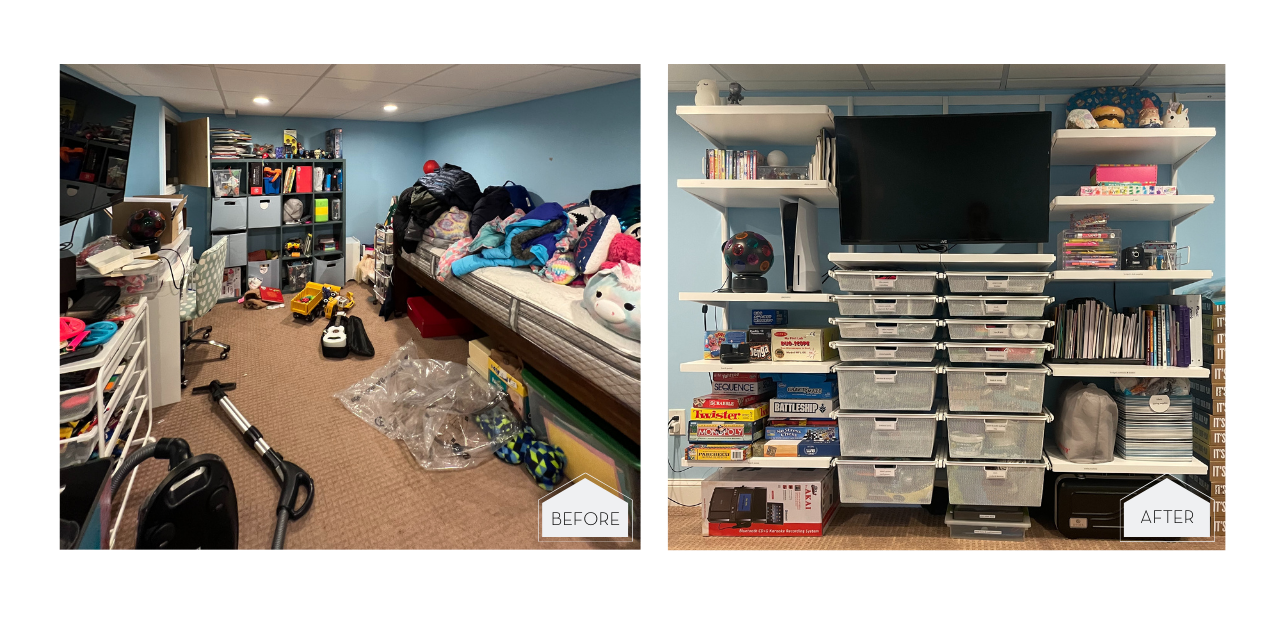
Toy Story Gone Wild
A toy room should feel like fun, not like a toy avalanche waiting to happen. Focus on function, not perfection. Kids should be able to find what they want and put it away without needing a treasure map.
Clear bins or mesh drawers are a great option in a toy room to help with containment while still allowing visibility to what's inside. Just accept the fact that these bins will be dumped out. Immediately. And with enthusiasm. The good news is that everything can be tossed right back in when playtime is over.
One of my favorite tricks in these spaces is treating the art projects, toys, and stuffies like decor. Display the cool stuff. Hang the astronaut helmet on a hook. Put the princess dresses on hangers. Fold the superhero capes and tuck them into a drawer. Setup a handful of the stuffies like they are having a casual tea time. Suddenly the room looks intentional instead of chaotic.
Living Room Legoland
If your child loves building with bricks, prepare for your home to become a minefield of tiny plastic pain traps. You have probably seen those dreamy photos of bricks sorted by color and shape. Those photos were taken before the children arrived.
Choose a spot to display the masterpieces and try to keep everything within that zone. Rotate the creations as new ones appear. Think of it as a tiny art gallery curated by a very enthusiastic architect. Put older sets in a mesh zipper bag with the assembly instructions and save them for a future rebuild or gift them to a friend.
Final Thoughts
When spaces are designed for everyone, they stop being battlegrounds and start becoming shared playgrounds
Designing with kids and parents together is not about choosing one group over the other. It is about listening to both, blending their ideas, and creating systems that feel welcoming, functional, and fun because they belong to the whole family.
Happy organizing!